
There is something magical about the first rain.
The smell of wet soil, the cool breeze after weeks of scorching heat, children running out to play, a hot cup of tea with pakoras—monsoon is perhaps the most awaited season in India. It brings relief from the summer, replenishes our rivers and reservoirs, and breathes new life into nature.
This year, however, the monsoon made us wait a little longer.
Many parts of the country experienced below-normal rainfall during June, raising concerns among farmers, policymakers and the general public. Fortunately, the situation has changed significantly over the past week. According to the India Meteorological Department (IMD), the southwest monsoon has entered an active phase due to the development of a well-marked low-pressure area over the northwest Bay of Bengal. As a result, rainfall activity has intensified across central, western and eastern India, and the rainfall deficit observed in June has begun to narrow.¹
For agriculture, this is welcome news.
For doctors, however, the arrival of heavy rains also signals the beginning of another season—the season of infections.
Monsoon Across India: What Is Happening This Year?
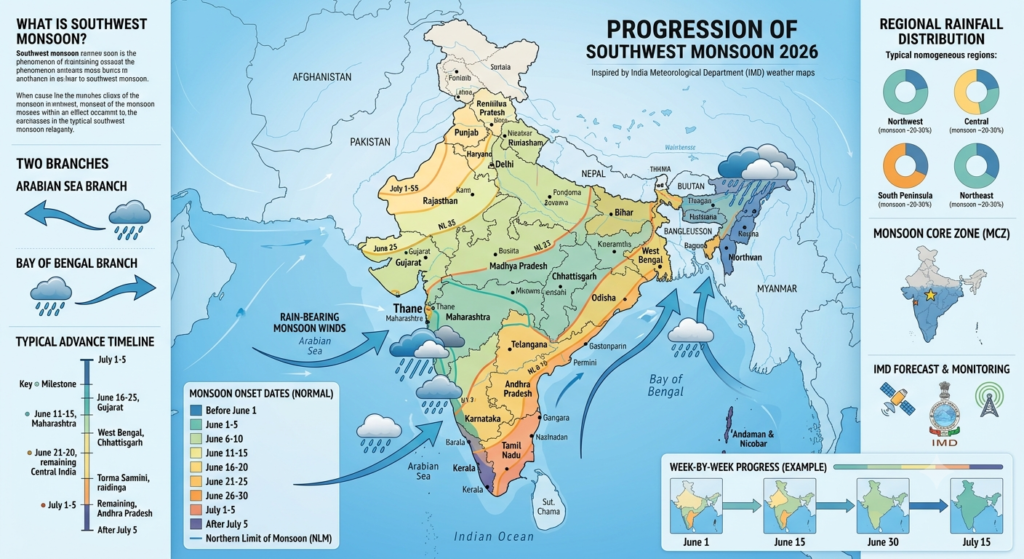
India’s southwest monsoon is more than just a weather event. Nearly half of the country’s agricultural land depends directly on seasonal rainfall. Water reservoirs are replenished, groundwater levels improve, and millions of people rely on these rains for their livelihoods.
I am not an expert on rainfall but my research on internet through various sources what i have understood is that, according to the latest IMD forecast, monsoon conditions are expected to remain active over central India for several days. Heavy to very heavy rainfall has been forecast across parts of Maharashtra, Gujarat, Madhya Pradesh, Odisha, Chhattisgarh and neighbouring states because of favourable atmospheric conditions.¹
The rainfall deficit that had reached nearly 40% during late June has already reduced considerably as widespread showers continue across several states. This demonstrates how quickly the monsoon can recover once the right weather systems become active.²
While these rains are a blessing for agriculture, they also bring challenges such as flooding, waterlogging, landslides and an increased risk of water-borne and mosquito-borne diseases.
Mumbai and Thane: Monsoon Has Arrived with Full Force
If you live in Mumbai or Thane, you probably don’t need a weather forecast to tell you that the monsoon has truly arrived.
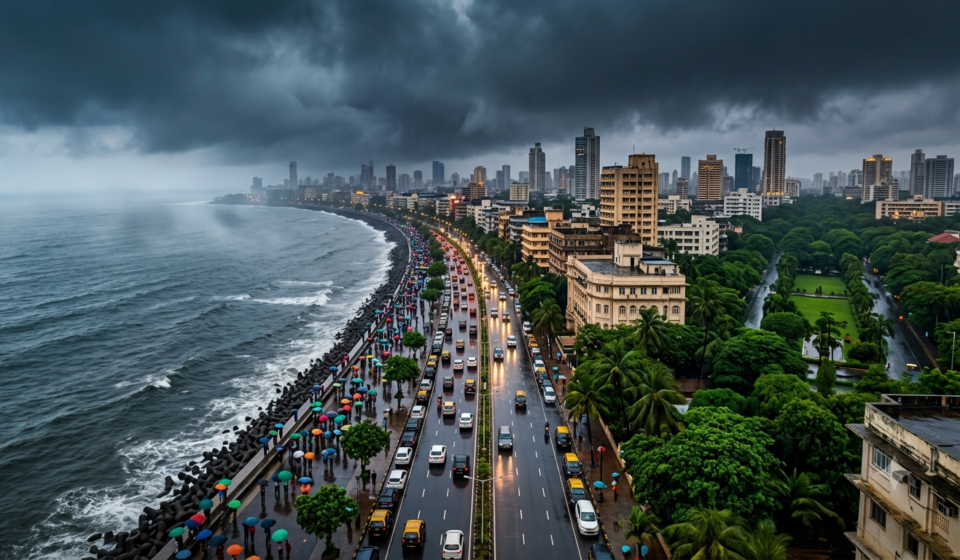
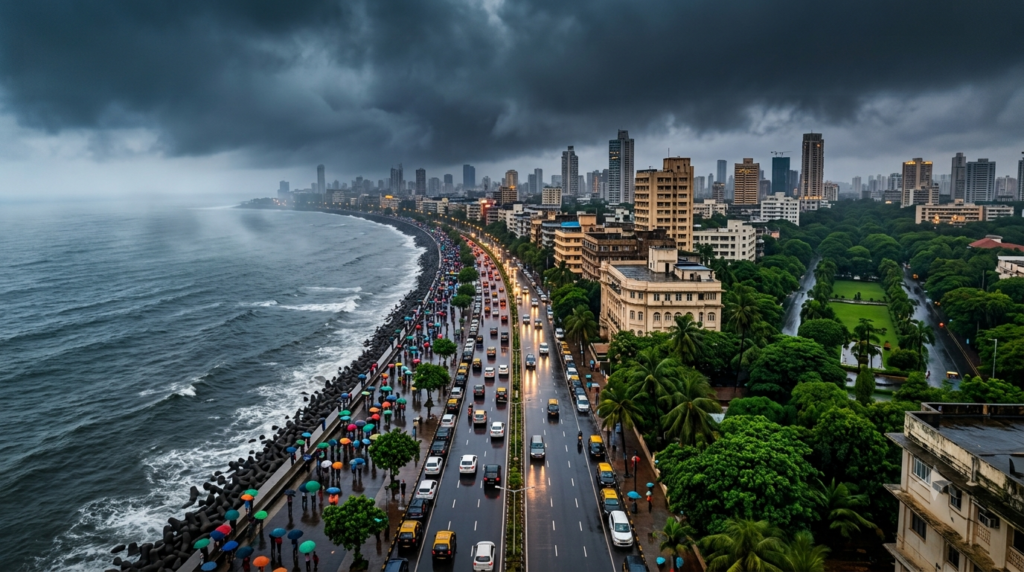
Over the past few days, residents have witnessed continuous rainfall, flooded roads, delayed local trains, traffic congestion and overflowing drains. Umbrellas, raincoats, poncho and “plastic bags” have once again become an essential part of daily life.
According to IMD observations, Mumbai received nearly 80% of its average July rainfall within just the first four days of the month..! The Santacruz observatory recorded around 675 mm of rainfall, while Colaba received approximately 500 mm during the same period.³
Because of the intense rainfall, the IMD issued Red Alerts for Mumbai, Thane, Palghar and neighbouring districts, warning of extremely heavy rainfall at isolated places. Authorities also cautioned citizens about possible flooding, waterlogging and disruption of transport services.³⁴
Heavy rainfall affected road traffic across the Mumbai Metropolitan Region. Several low-lying areas experienced water accumulation, local train services were affected at certain locations, and commuters had to deal with longer travel times.
For many people, these scenes are simply a part of “Mumbai monsoon”, which actually should not be. But, that’s a different topic which we can cover in different blog.
But from a healthcare perspective, this is also the time when hospitals begin to see a noticeable increase in patients with seasonal illnesses.
The Rain Brings More Than Just Cool Weather
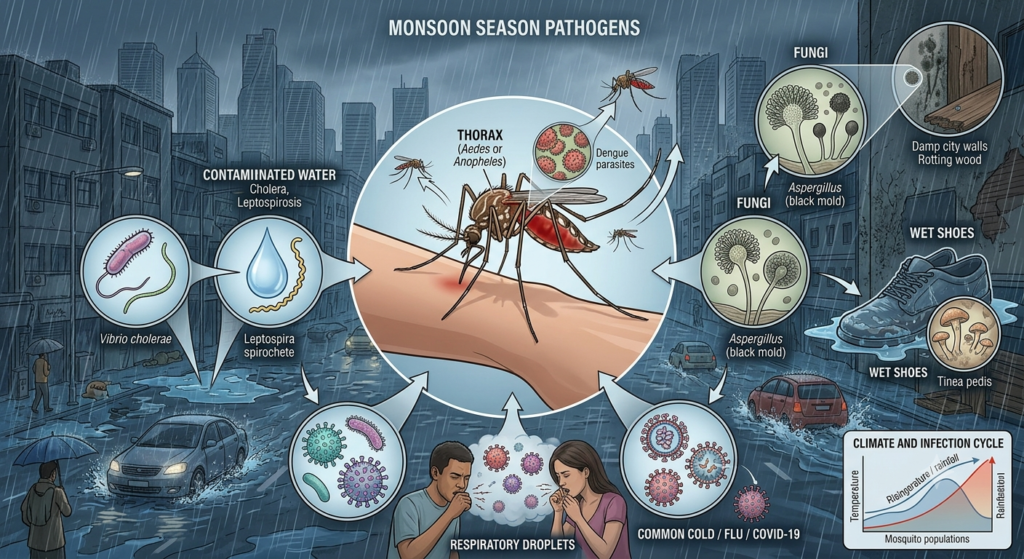
Monsoon changes much more than the temperature.
The combination of standing water (one of the main reasons why I don’t like monsoon!!), increased humidity, contaminated drinking water and favourable conditions for mosquitoes creates an ideal environment for several infectious diseases.
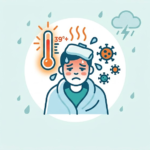
As doctors, we often notice a sharp increase in patients suffering from fever, diarrhoea, dengue, malaria, leptospirosis, fungal skin infections and respiratory illnesses during this season.
The rains themselves do not make us sick.
Instead, the environment created by the rains allows disease-causing organisms to spread more easily.
Understanding this difference is important because most monsoon illnesses are preventable.
In the next section, we will look at the common diseases seen during the monsoon, why they occur, and the simple precautions every family can take to stay healthy.
References
- India Meteorological Department (IMD). Current Weather Status and Extended Range Forecast, July 2026.
- IMD reports active monsoon phase reducing June rainfall deficit across central India.
- Mumbai receives nearly 80% of July’s average rainfall within four days; IMD issues Red Alert.
- IMD forecast for heavy to extremely heavy rainfall across Mumbai, Thane and Maharashtra during the active monsoon phase.