
The monsoon season is meant to be enjoyed, not feared. We discussed in previous articles that, while it does increase the risk of several infections, most monsoon-related illnesses are preventable with a few simple precautions. Small daily habits can go a long way in protecting you and your family.
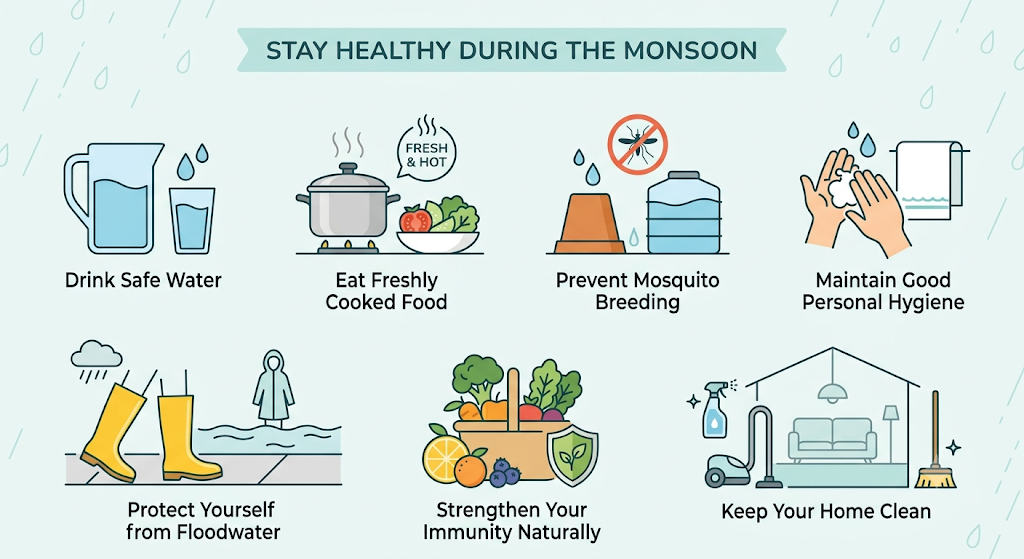
1. Drink Safe Water
Water contamination is one of the biggest health concerns during the rainy season. Always drink boiled, filtered or properly purified water. Avoid consuming water from unknown sources, especially while travelling.
2. Eat Freshly Cooked Food
Warm and humid weather allows bacteria to multiply quickly. Eat freshly prepared meals, wash fruits and vegetables thoroughly, and avoid stale food. During heavy rains, it is also wise to limit consumption of uncovered street food.
3. Prevent Mosquito Breeding
Mosquitoes need very little stagnant water to breed. Empty water collected in flower pots, coolers, buckets and discarded containers every week. Use mosquito repellents, window screens and full-sleeved clothing, particularly during the early morning and evening hours.
4. Maintain Good Personal Hygiene
Wash your hands with soap before eating and after using the washroom. Dry your feet properly after returning home, especially if you have walked through rainwater. Change wet clothes as soon as possible to reduce the risk of fungal infections.
5. Protect Yourself from Floodwater
If you must walk through flooded streets, wear waterproof footwear whenever possible and clean your feet thoroughly afterwards. Individuals with cuts or wounds should avoid direct contact with contaminated water, as this may increase the risk of leptospirosis and other infections.
6. Strengthen Your Immunity Naturally
A balanced diet rich in fruits, vegetables, whole grains, adequate protein and sufficient sleep helps support the immune system. Regular physical activity and stress management also play an important role in maintaining overall health.
7. Keep Your Home Clean
Keep your surroundings clean and dry. Ensure proper waste disposal, avoid water accumulation around your home and maintain adequate ventilation to reduce dampness and mould growth.
When Should You See a Doctor?
Many seasonal illnesses begin with symptoms that appear mild. However, certain warning signs, which people take for grant, should never be ignored.
Seek medical attention immediately if you or a family member experiences:
- Fever lasting more than 2–3 days
- Very high fever with severe body pain
- Difficulty breathing or chest pain
- Persistent vomiting or inability to drink fluids
- Severe diarrhoea or signs of dehydration
- Blood in vomit, stools or urine
- Confusion, excessive drowsiness or seizures
- Reduced urine output
- Yellowing of the eyes or skin
- Severe abdominal pain
Early diagnosis and timely treatment can prevent complications and improve recovery.
A Doctor’s Perspective
Every year, as the first rains arrive, clinics and hospitals begin to see an increase in patients with seasonal illnesses. Many of these conditions are completely preventable, yet they continue to affect thousands of people because simple precautions are overlooked.
As doctors, we often say that prevention is always better than treatment. This is especially true during the monsoon. Safe drinking water, good hygiene, mosquito control and early medical consultation are far more effective than waiting for an illness to become severe.
The monsoon is one of the most beautiful seasons in India. It fills our lakes, nourishes our farms and brings welcome relief from the summer heat. It is a season to enjoy with family, hot meals and fresh air—but it is also a season that reminds us to be more mindful of our health.
By taking a few preventive steps today, you can significantly reduce your risk of illness tomorrow.
So finally…
The arrival of the monsoon is a reminder that every season brings its own opportunities and challenges. While we celebrate the beauty of the rains, we should also respect the health risks that accompany them.
Simple habits—drinking safe water, preventing mosquito breeding, maintaining hygiene and seeking timely medical care—can protect you and your loved ones from many common monsoon diseases.
Enjoy the rains, cherish the season and create beautiful memories—but don’t let preventable illnesses spoil them.
Stay informed. Stay prepared. Stay healthy.
References
- India Meteorological Department (IMD). Monsoon Updates and Forecasts.
- World Health Organization. Water, Sanitation and Health.
- National Centre for Vector Borne Disease Control (NCVBDC), Government of India.
- World Health Organization. Dengue and Severe Dengue Fact Sheet.
- World Health Organization. Malaria Fact Sheet.
- World Health Organization. Leptospirosis.
- Ministry of Health & Family Welfare, Government of India. Seasonal Health Advisories.
- Centers for Disease Control and Prevention. Food Safety and Fungal Diseases.