
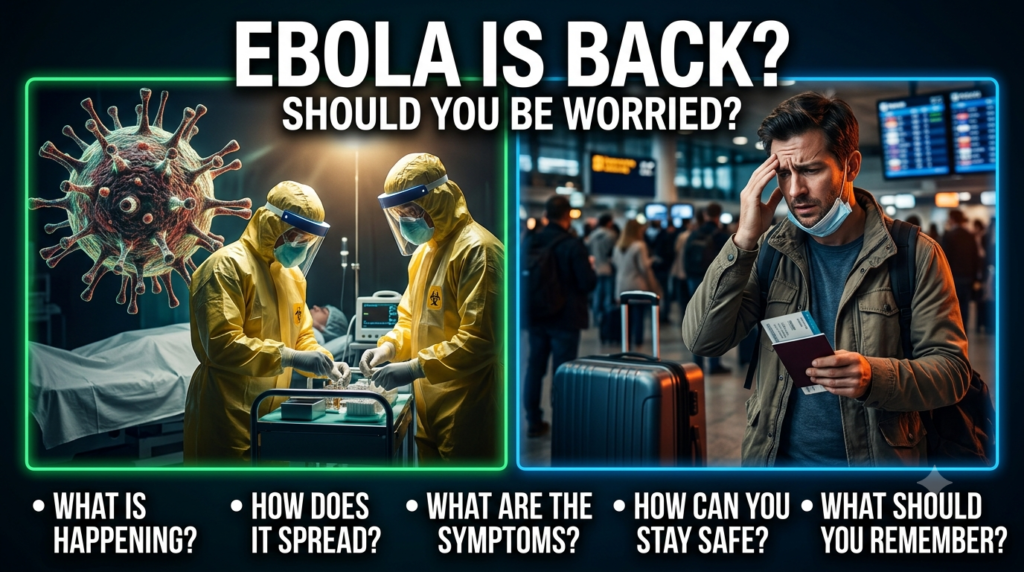
Over the past few weeks, Ebola has once again made headlines across the world. Reports of a growing outbreak in parts of the Democratic Republic of the Congo (DRC) have raised concerns among public health experts. Naturally, many people are asking: Should I be worried? Can Ebola spread globally again?
The good news is that there is no need to panic. However, this is certainly a time to stay informed.
What is Ebola?
Ebola Virus Disease (EVD) is a rare but serious viral illness caused by viruses belonging to the Ebolavirus family. It is known for causing outbreaks with high mortality if not diagnosed and treated early.¹
The virus was first identified in 1976 near the Ebola River in what is now the Democratic Republic of the Congo.¹
What Is Happening Right Now?
According to the World Health Organization (WHO), an outbreak caused by the Bundibugyo virus species is currently being monitored in the Democratic Republic of the Congo. Public health authorities have intensified surveillance, laboratory testing, contact tracing, and isolation measures to limit further spread.¹
The US Centers for Disease Control and Prevention (CDC) has also enhanced its monitoring efforts. While international health agencies continue to watch the situation closely, the overall risk to the general public outside the affected regions remains low.²
This outbreak reminds us that infectious diseases continue to emerge and that global surveillance remains essential.
How Does Ebola Spread?
One of the biggest misconceptions is that Ebola spreads through the air like COVID-19 or influenza.
**It does not.**¹
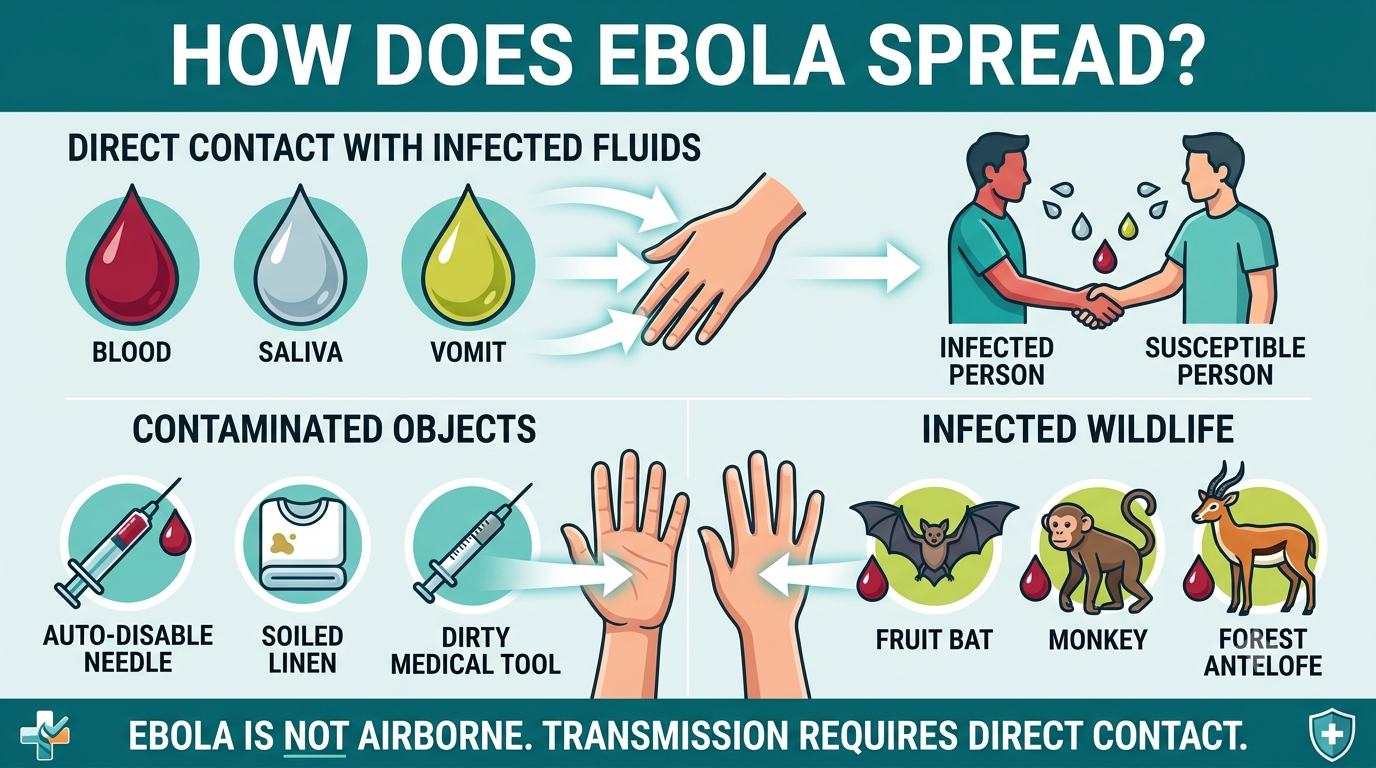
Ebola spreads through direct contact with:
- Blood
- Vomit
- Saliva
- Sweat
- Urine
- Stool
- Semen
- Other body fluids of an infected person¹²
The virus may also spread through contaminated needles, medical equipment, clothing, bedding, or contact with infected wild animals.²
Importantly, people do not transmit Ebola before symptoms begin.¹
What Are the Symptoms?
Symptoms usually appear 2–21 days after exposure.²
Early symptoms include:
- Fever
- Severe weakness
- Muscle pain
- Headache
- Sore throat²
As the illness progresses, patients may develop:
- Vomiting
- Diarrhoea
- Abdominal pain
- Skin rash
- Unexplained bleeding or bruising in some patients¹²
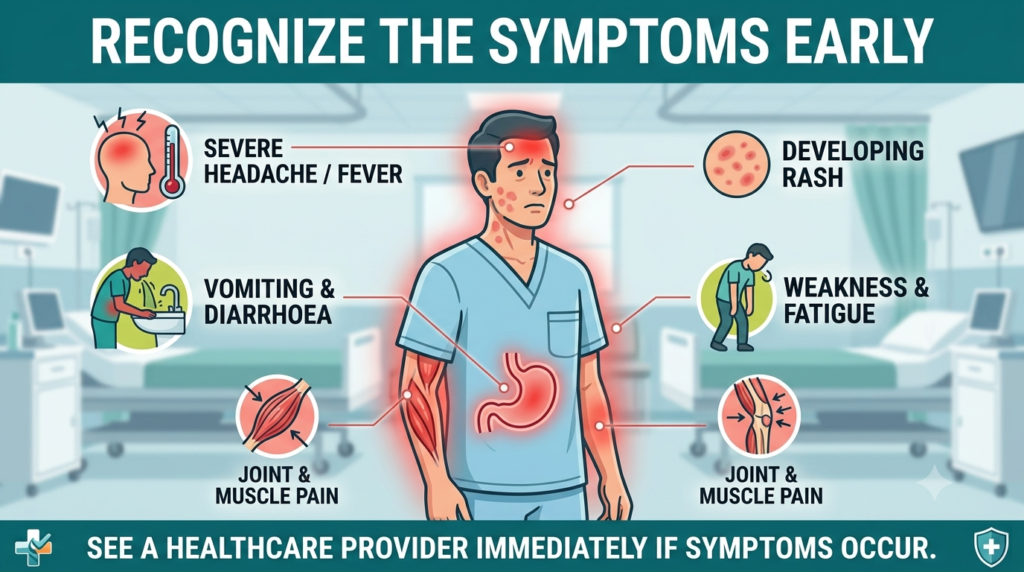
Contrary to popular belief, not every patient develops severe bleeding, especially during the early stages of illness.²
Is There Any Treatment?
There is no simple cure for Ebola, but treatment has improved considerably over the last decade.
Supportive hospital care—including intravenous fluids, oxygen therapy, electrolyte correction, and management of complications—can significantly improve survival.²
Vaccines and monoclonal antibody therapies are available for some Ebola virus species, although their effectiveness varies depending on the strain responsible for the outbreak.¹³
Should People in India Be Worried?
At present, the risk of Ebola spreading in India is considered very low.¹²
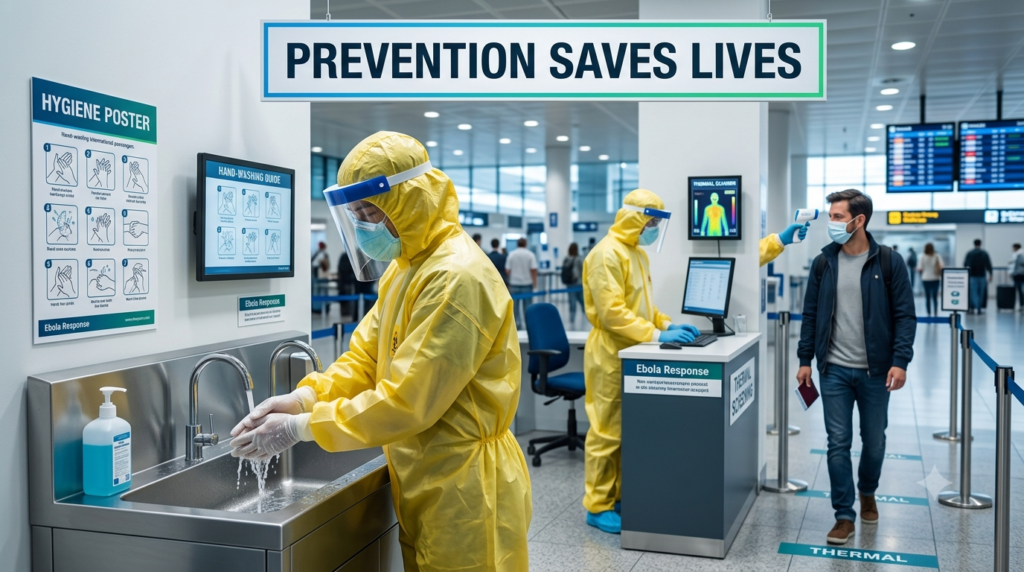
India maintains surveillance at international airports and follows WHO recommendations for screening travellers arriving from affected regions.²
Unless you have recently travelled to an affected country or had direct exposure to a confirmed Ebola patient, your personal risk remains extremely low.
How Can You Protect Yourself?
Fortunately, the preventive measures are straightforward:
- Wash your hands regularly.
- Avoid direct contact with blood or body fluids of sick individuals.
- Follow official travel advisories.
- Seek immediate medical attention if you develop symptoms after travelling to an affected area.
- Avoid spreading rumours or misinformation on social media.¹²
The Bigger Lesson
Every outbreak reminds us that infectious diseases remain a global challenge.
COVID-19 taught us the importance of surveillance, scientific research, public health systems, and responsible behaviour. Ebola reminds us that early detection, rapid isolation, community awareness, and international cooperation remain the strongest tools for controlling deadly infections.¹⁴
As individuals, our responsibility is simple:

Stay informed. Trust science. Avoid panic.
Knowledge is always more powerful than fear.
References
- World Health Organization. Disease Outbreak News: Ebola disease caused by Bundibugyo virus – Democratic Republic of the Congo. Geneva: WHO; 2026.
- Centers for Disease Control and Prevention (CDC). Ebola (Ebola Virus Disease): Signs, Symptoms, Transmission and Prevention. Updated 2026.
- National Institute of Allergy and Infectious Diseases (NIAID). Ebola Treatment and Vaccines. National Institutes of Health.
- Africa Centres for Disease Control and Prevention (Africa CDC). Ebola Outbreak Situation Reports. 2026.
- European Centre for Disease Prevention and Control (ECDC). Rapid Risk Assessment: Ebola Virus Disease Outbreak, Democratic Republic of the Congo. 2026.